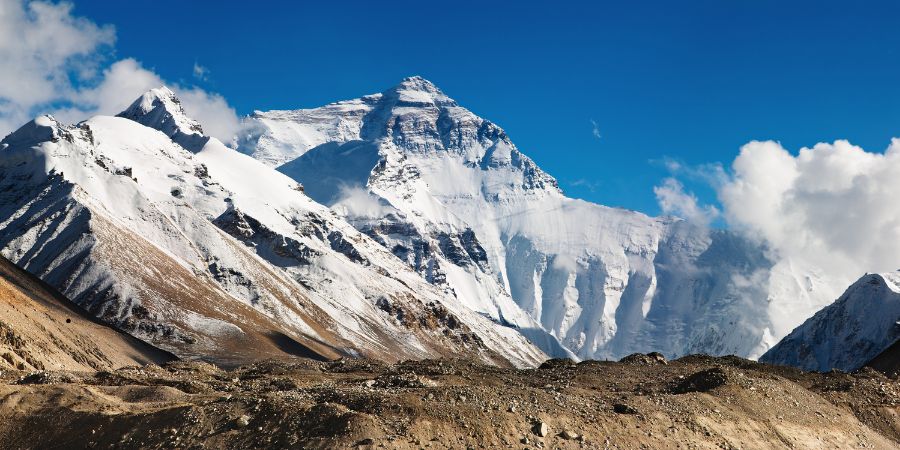
Lobuche Peak Climbing - 19 Days

From $2,233 per person Save 5%
Everest Region
0 reviews
Starting from US$2350
US$2233 /person
Group Discounts
  • Best Price Guarantee
  • Secure Online Booking
  • Tailor Made Trips
  • No Booking Fees
Book Now

Not what you're looking for?

Customize This Trip
US$ 2232.5 Best Price
19 Days
Everest Region Destination
March/May To Sep/Nov Best Season
Strenuous Difficulty Level
6,189m Max Altitude

Lobuche Peak Climbing with Himalayan Immersion Treks is an extraordinary adventure that combines the thrill of high-altitude mountaineering with the awe-inspiring beauty of the Everest region. This 22-day journey is perfect for those who want to go beyond trekking and experience the exhilaration of summiting a Himalayan peak. The expedition begins with a scenic flight to Lukla, where the real adventure starts as you follow the legendary trail to Everest Base Camp.

Along the way, you’ll pass through vibrant Sherpa villages like Namche Bazaar, Tengboche, and Dingboche, immersing yourself in the rich culture and traditions of the Khumbu Valley. The trek offers breathtaking views of towering peaks, including Everest, Lhotse, Nuptse, and Ama Dablam, while you gradually acclimatize to the high altitude. A highlight of the journey is the hike to Kalapatthar, a vantage point that provides one of the most stunning panoramas of Everest and the surrounding Himalayas. From there, the focus shifts to the climb itself, as you make your way to Lobuche East Base Camp. The ascent involves traversing glaciers, using ropes and crampons, and applying basic mountaineering techniques, making it an ideal challenge for those looking to test their skills.

Standing at 6,119 meters, the summit of Lobuche East rewards you with a 360-degree view of some of the world’s highest mountains, a moment of pure triumph and awe. The descent retraces your steps through the Khumbu Valley, allowing you to reflect on the incredible journey and the bonds formed along the way. Himalayan Immersion Treks ensures a well-planned itinerary with experienced guides, proper acclimatization, and safety measures, making this adventure accessible to those with good physical fitness and a passion for the mountains. The trek also offers a deep connection to the region’s history, from the early Sherpa settlers to the golden age of Everest expeditions.

Lobuche Peak Climbing is more than just a climb—it’s a transformative experience that blends adventure, culture, and the raw beauty of the Himalayas. Whether you’re an aspiring mountaineer or an avid trekker seeking a new challenge, this journey promises unforgettable memories and a profound sense of achievement. The diverse landscapes, from lush rhododendron forests to icy glacial moraines, add to the richness of the experience, while the warmth and hospitality of the Sherpa people make it even more special. Every step of the way, you’ll be surrounded by towering peaks, ancient monasteries, and the serene spirituality of the mountains.

The climb itself is demanding but achievable, with the right preparation and mindset, and the sense of accomplishment upon reaching the summit is unparalleled. Himalayan Immersion Treks provides all the necessary support, from permits and logistics to expert guidance, ensuring a smooth and rewarding adventure. This is not just a trek or a climb—it’s a journey into the heart of the Himalayas, where every moment is filled with wonder and inspiration. For those who dream of standing on a Himalayan peak, Lobuche East offers the perfect opportunity to turn that dream into reality. The combination of physical challenge, cultural immersion, and breathtaking scenery makes this one of the most rewarding adventures in Nepal. Whether you’re gazing at the stars from a high-altitude camp or sharing stories with fellow climbers in a teahouse, the experience is filled with moments that will stay with you forever. Lobuche Peak Climbing is a testament to the spirit of exploration and the enduring allure of the world’s highest mountains. With Himalayan Immersion Treks, you’ll embark on a journey that challenges you, inspires you, and leaves you with a deep appreciation for the majesty of the Himalayas. This is more than just a climb—it’s an adventure of a lifetime.

Why Choose Himalayan Immersion Treks for Lobuche Peak Climbing?

1. Expert & Friendly Guides
Our guides are not just highly experienced—they’re like family. With years of mountaineering knowledge and deep familiarity with the Khumbu region, they ensure your climb is safe, enjoyable, and successful. They provide step-by-step guidance, from pre-trek preparations to the final summit push, making sure you’re fully prepared for the challenge.
2. Carefully Designed Itinerary
We’ve crafted a 22-day itinerary that balances adventure with proper acclimatization, giving you the best chance to summit Lobuche East (6,119m) while also enjoying the iconic Everest Base Camp trek. Our schedule includes strategic rest days, cultural stops at Sherpa villages, and breathtaking viewpoints like Kala Patthar for the ultimate Himalayan experience.
3. Safety as Top Priority
Your well-being is our biggest concern. We provide high-quality climbing gear, trained staff, and emergency protocols to handle altitude sickness or any unexpected challenges. Our guides are certified in wilderness first aid, and we maintain small group sizes to ensure individual attention.
4. Authentic Cultural Immersion
Beyond climbing, we immerse you in Sherpa culture—staying in traditional teahouses, tasting local cuisine, and visiting ancient monasteries. Our strong connections with local communities mean you’ll experience genuine hospitality while supporting sustainable tourism.
5. Seamless Logistics & Comfort
From Lukla flights to cozy lodges and high-altitude camps, we handle all logistics smoothly. We partner with the best local hotels and transportation providers, ensuring comfort even in remote areas. You’ll enjoy nutritious meals, clean accommodations, and reliable gear throughout the journey.
6. Responsible & Ethical Trekking
We respect the mountains and the people who call them home. Our treks follow eco-friendly practices, and we prioritize fair wages for our staff and porters. By choosing us, you contribute to ethical tourism that benefits local communities.
7. Unbeatable Value
We offer transparent pricing with no hidden costs, covering permits, meals, accommodations, and expert guidance. Whether you’re a solo traveler or a group, we customize packages to fit your budget and preferences.
8. A Legacy of Trust
With years of experience leading successful climbs, Himalayan Immersion Treks has built a reputation for excellence. Our past climbers rave about their life-changing experiences, and we’re committed to making your Lobuche Peak adventure just as unforgettable.

Best Season for Lobuche Peak Climbing & Himalayan Immersion Trek

Best Season

  1. Spring (March – May)
    -The trails come alive with colorful wildflowers, especially rhododendrons, painting the landscape in vibrant hues.
    -Warm temperatures and stable weather provide comfortable trekking conditions.
    -Crystal-clear skies offer uninterrupted views of Everest, Ama Dablam, and the surrounding peaks.
    -Perfect for peak climbing, as snow conditions are optimal, and the days are longer.
  2. Autumn (September – November)
    -After the monsoon, the air is fresh and crisp, with unmatched visibility for photography.
    -The landscape is lush from the rains, and flowers bloom along the trails.
    -Cool, dry weather makes trekking enjoyable, with minimal rain or snowfall.
    -Festive atmosphere—many local Sherpa festivals (like Mani Rimdu) take place during this season.
    Seasons to Avoid
  3. Monsoon (June – August)
    -Heavy rainfall leads to slippery trails, landslides, and swollen rivers, making trekking risky.
    -Cloudy skies block mountain views, and leeches are common in forested areas.
    -Many teahouses may close, and flight delays to Lukla are frequent.
  4. Winter (December – February)
    -Extreme cold and heavy snowfall make high-altitude trekking challenging and risky.
    -Many lodges shut down, and avalanche risks increase in certain sections.
    -Shorter daylight hours and poor visibility reduce the trekking experience.
Preparation For this Peak Climbing

1. Physical Training (Start 2-3 Months Before)
-Build endurance by walking at least 1 hour daily (jogging, stair climbing, or uphill hikes).
-Include weekend hikes (4-6 hours) with a loaded backpack to simulate trekking conditions.
-Strengthen your legs, core, and cardiovascular fitness—squats, lunges, and cycling help.
-If possible, train at moderate altitudes to help your body adapt.
2. Mental Preparation
-High-altitude trekking is demanding—be ready for changing weather, steep climbs, and thin air.
-Stay patient and positive—altitude affects everyone differently; listen to your body.
-Acclimatization is crucial—follow a gradual ascent to avoid altitude sickness.
3. Gear & Packing Essentials
Clothing (Layered & Weatherproof)
-Base layers (moisture-wicking)
-Insulating layers (fleece/down jacket)
-Waterproof outer shell (windproof jacket & pants)
-Trekking pants, thermal wear, gloves, warm hat, and buff
Footwear
-Sturdy, broken-in hiking boots (ankle support, waterproof)
-Trekking socks (wool blend, avoid cotton)
-Camp shoes/sandals for rest days
Backpack & Personal Gear
-40-50L backpack (with rain cover)
-Daypack (for summit push)
-Sunglasses (UV-protected), headlamp, reusable water bottle
-Camera, power bank, and extra batteries (cold drains battery life)
High-Altitude Essentials
-Trekking poles (for stability)
-Sleeping bag (rated for -10°C to -15°C)
-Sunscreen (SPF 50+), lip balm, and moisturizer
4. Required Documents & Permits
-Valid passport (with extra photocopies)
-Nepal visa (obtained on arrival)
-TIMS card & Sagarmatha National Park Permit
-Lobuche Peak Climbing Permit (arranged by your agency)
5. Health & Safety
-First aid kit (blister plasters, painkillers, antiseptic cream)
-Altitude sickness medication (Diamox, as per doctor’s advice)
-Water purification tablets or a portable filter
-Travel insurance (must cover high-altitude trekking up to 6,119m)
Final Tips
-Break in your boots before the trek to avoid blisters.
-Stay hydrated (3-4L water daily) to help with acclimatization.
-Pack light but smart—only essentials, as porters carry a weight limit.
  • Full-Day Exploration in Namche Bazaar – Stroll through the vibrant Sherpa trading hub, browse local handicrafts, and soak in the mountain culture.
  • Lobuche East Peak Climbing (6,119m) – Summit one of Nepal’s most popular trekking peaks, conquering breathtaking glacial ridges and snow slopes with expert guidance.
  • Sunrise at Kala Patthar – Witness the golden glow of Everest and the Khumbu Glacier from this iconic viewpoint.
  • Sherpa Culture & Ancient Monasteries – Visit historic gompas like Tengboche, spin prayer wheels, and observe Buddhist rituals in sacred spaces.
  • Traditional Sherpa Villages – Walk through settlements like Pangboche and Dingboche, learning about Sherpa traditions, stone houses, and yak farming.
  • Sherpa Cuisine Experience – Savor local delicacies like thukpa, shyakpa, and butter tea in cozy teahouses.
  • High-Altitude Adventure Training – Learn essential mountaineering skills, including ice axe use, crampon techniques, and fixed-rope climbing for Lobuche Peak.
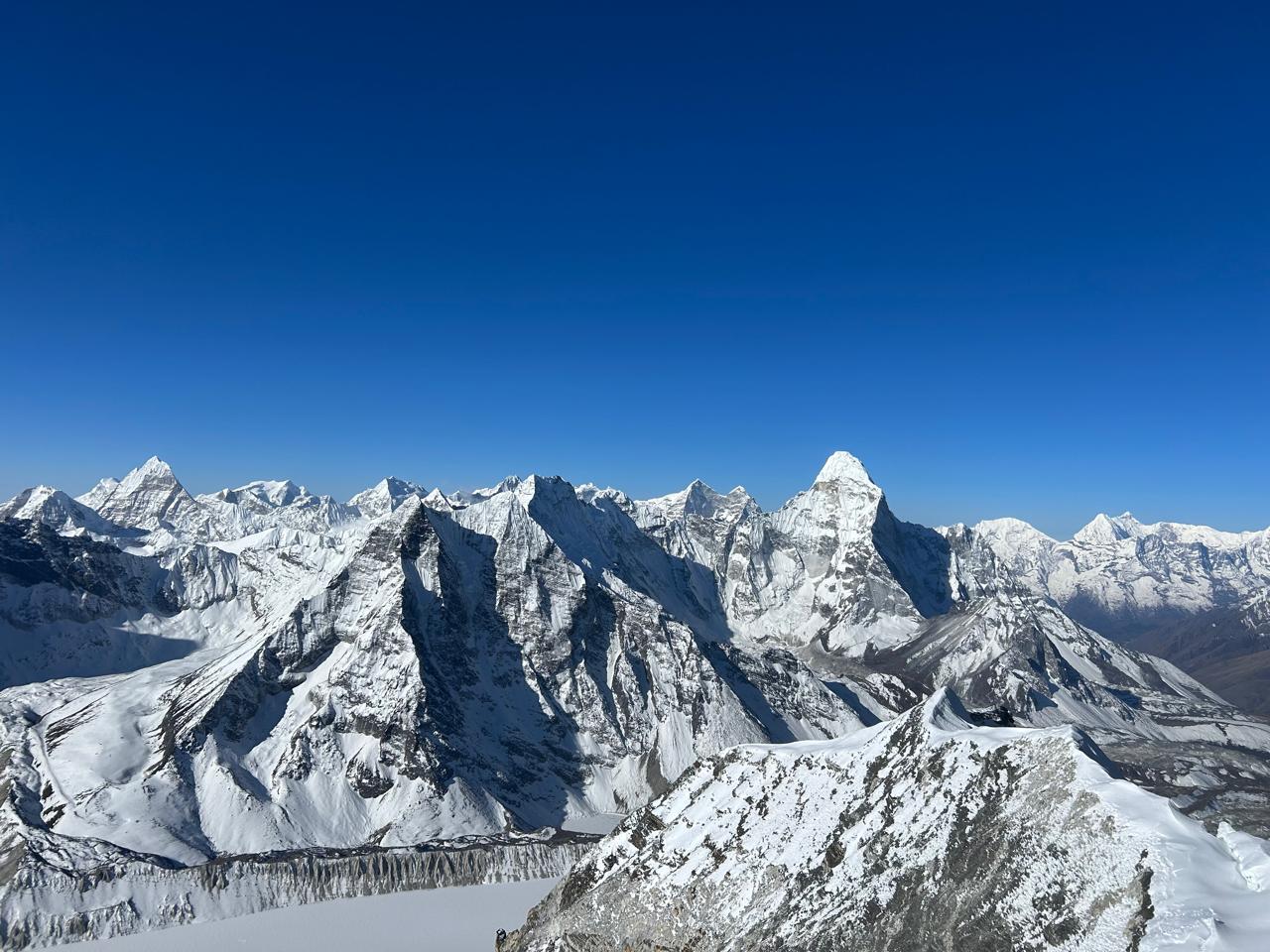
  • Scenic Himalayan Landscapes – Trek through rhododendron forests, glacial moraines, and high alpine meadows with stunning views of Ama Dablam, Nuptse, and Everest.
  • Photography Paradise – Capture dramatic mountain vistas, prayer-flag-lined trails, and the raw beauty of the Khumbu region.
  • Lukla Airport Thrill – Experience the exhilarating takeoff and landing at one of the world’s most adventurous airports.
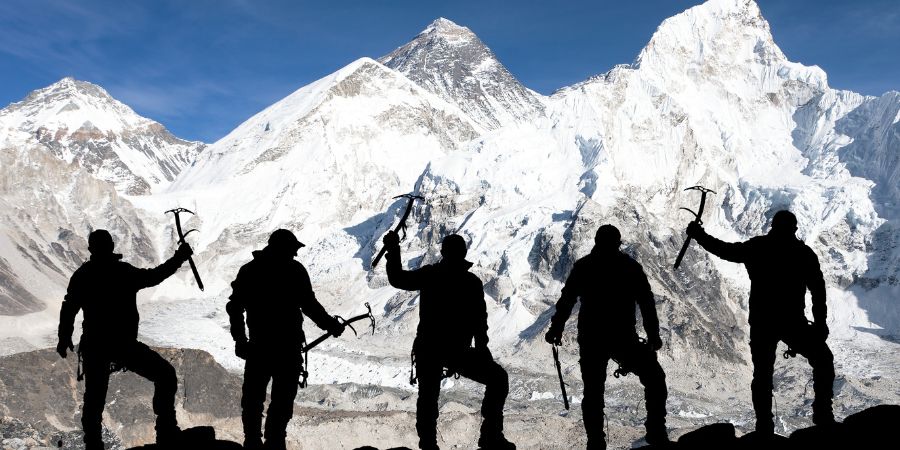
  • Peak Climbing Achievement – Earn the pride of summiting a 6,000m Himalayan peak, with a rewarding panoramic view from the top.
  • Sustainable & Cultural Immersion – Support local communities while gaining deep insights into Himalayan life beyond the trails.
Included:
  • Airport pickups & drop-offs (Kathmandu)
  • 3 nights hotel accommodation in Kathmandu with breakfast (twin-sharing)
  • Domestic flights: Kathmandu–Lukla–Kathmandu (including airport taxes)
  • All ground transportation for trekking and climbing support
  • Government-licensed English-speaking trekking and climbing guides
  • Porters for carrying personal gear (1 porter per 2 clients)
  • All meals during trek & climb (breakfast, lunch, dinner, tea/coffee). You can only choose one item per meal.
  • Lodge/teahouse accommodation during trek & tented camping at High Camp
  • Lobuche East climbing permit
  • Sagarmatha National Park fee
  • All Trekking permits and Necessary documents, Climbing permit
  • Sleeping bag, Down Jacket( If Necessary) & Duffle bag by company
  • Staff insurance, medication and equipment,
  • First Aid Kit and Special Care
  • Rescue arrangements for our clients
  • All Govt. and Local Taxes
  • Satellite phone communication (for emergency use)
Excluded:
  • International airfares
  • Travel/trekking insurance
  • Kathmandu sightseeing Entrance fees
  • Nepal entry visa fees.
  • Mountain rescue charges or insurance
  • Bottled drinks on trek (cold and alcoholic) and Hot Drinks
  • Lunch and dinner during your stay in Kathmandu.
  • Additional food or drink on trek in addition to three standard meals
  • Personal expenses, Emergency Expenses, road blocked, snakes, desert.etc
  • Tips, Hot Showers
  • Which is not mentions in Cost Included Section.
Day 1

Arrival in Kathmandu.

Accomodation
Hotel
Meal
.

Time
Null
Max Altitude
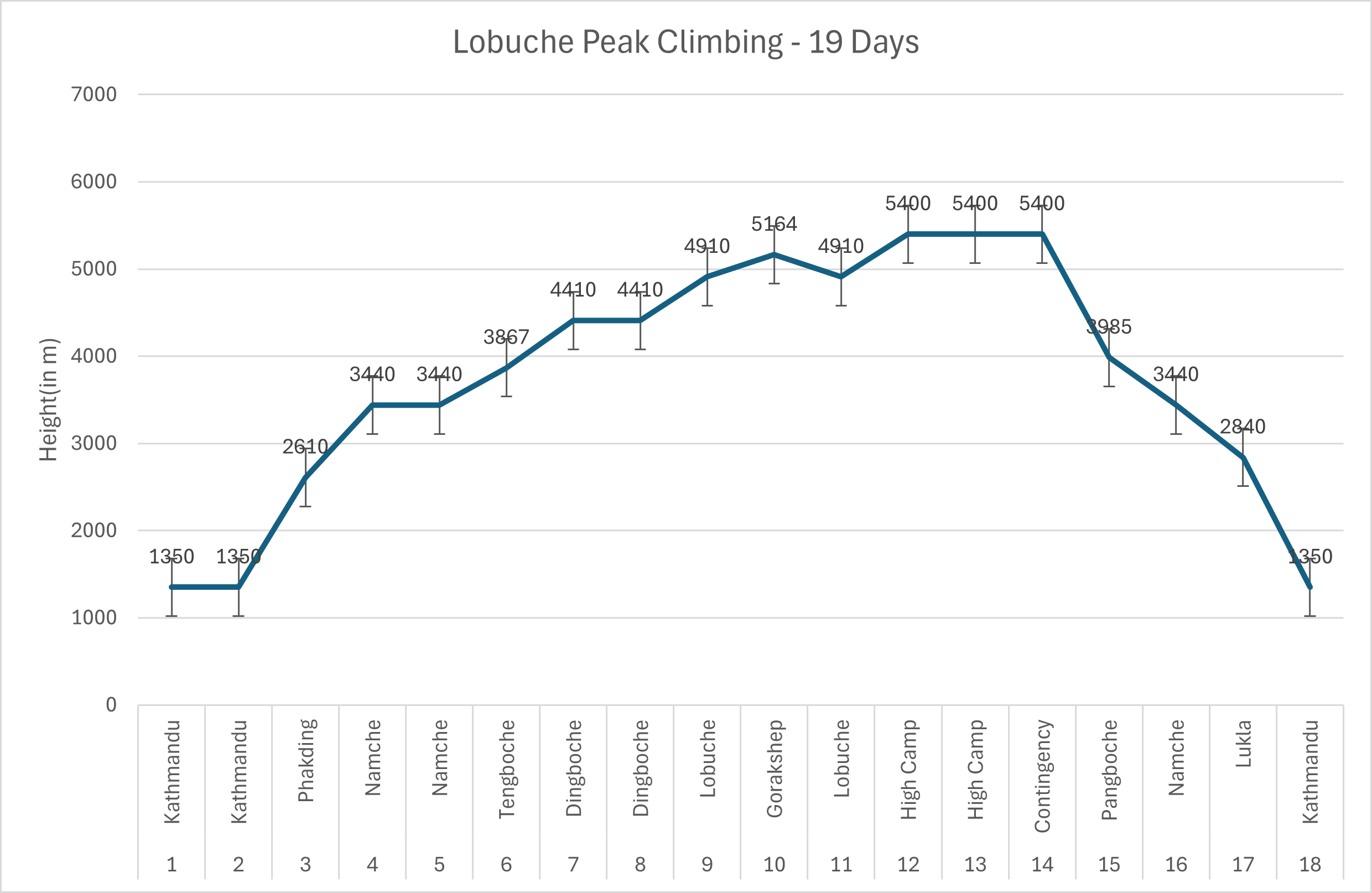
1350m

Welcome to Nepal! Upon arrival at Tribhuvan International Airport, our team will greet you and transfer you to your hotel in Thamel – the heart of Kathmandu’s vibrant trekking hub. In the evening, you'll meet your guide for a detailed trip briefing and check your gear for the expedition.

Day 2
Accomodation
Hotel
Meal
Breakfast

Time
Null
Max Altitude
1350m

Today we will take a tour around the city of Kathmandu, visiting the major heritage sites such as; Pashupatinath, Boudhanath, Swayambhunath and Patan Durbar Square. You will be guided and informed by a licensed guide. 

Day 3
Accomodation
Tea house
Meal
BLD

Time
3-4 hours
Max Altitude
3440m

The adventure begins with a thrilling 35-minute flight to Lukla, offering mountain views right from your plane seat. After meeting the rest of the trekking crew, we begin an easy trek downhill through pine forests and Sherpa villages to Phakding. The trail follows the Dudh Koshi River, setting the tone for the days ahead.

Day 4
Accomodation
Tea house
Meal
BLD

Time
5-6 hrs
Max Altitude
3440m

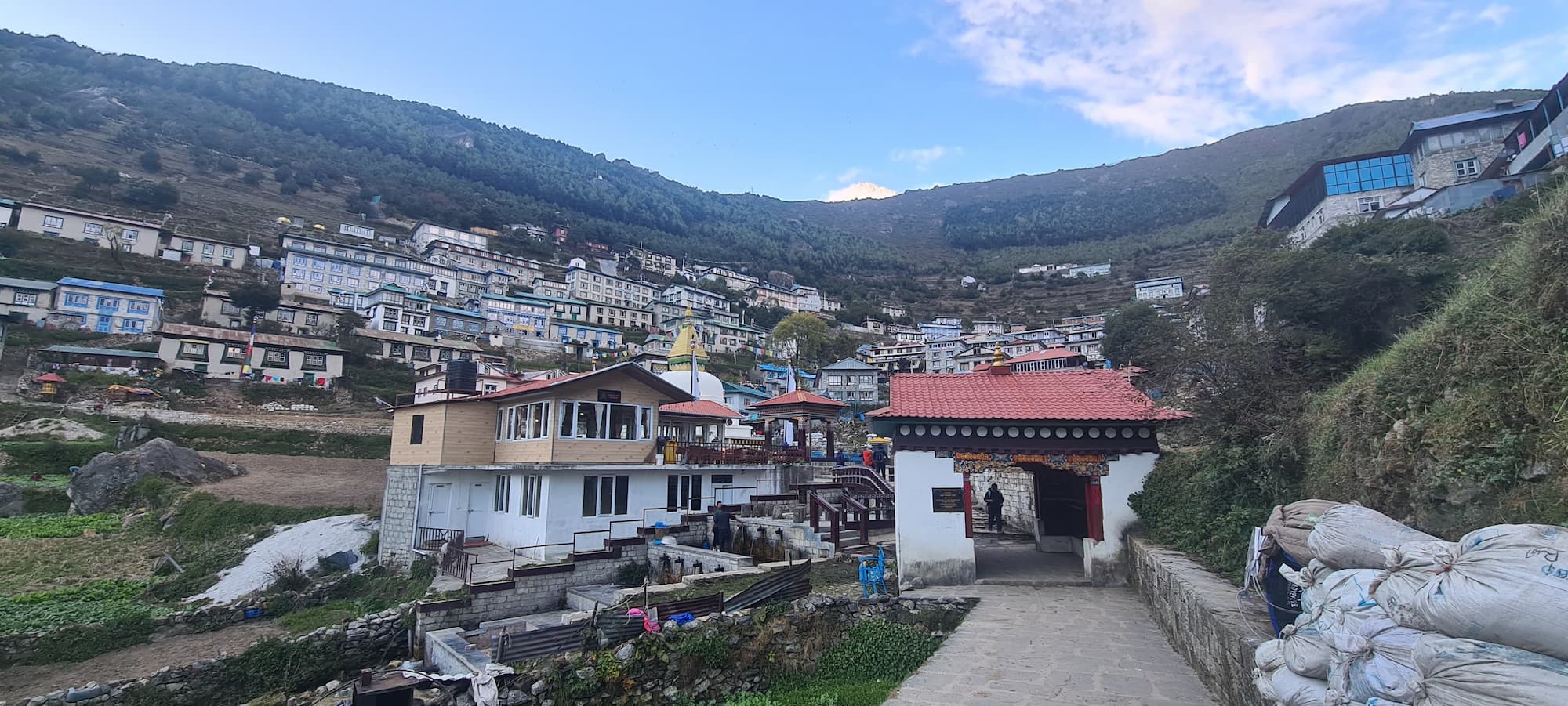
Today we enter Sagarmatha National Park. The trail gradually ascends, crossing suspension bridges (including the iconic Hillary Bridge) and passing through small settlements. Today we will also see the first glimpse of Everest before Namche if the weather is clear.The final push to Namche is steep but rewarding. Namche Bazaar is the biggest Sherpa town in the region, with cafés, bakeries, and gear shops nestled in a natural amphitheater.

Namche Bazzar
Namche Bazzar


Day 5
Accomodation
Tea house
Meal
BLD

Time
4 hrs
Max Altitude
3880

Acclimatization is crucial at this altitude. We'll hike to Everest View Hotel (3,880m) for stunning panoramic views of Everest, Lhotse, and Ama Dablam. You’ll return to Namche in time for lunch and have the afternoon free to explore the Sherpa Culture Museum or enjoy a coffee with a mountain backdrop.

Day 6
Accomodation
Tea house
Meal
BLD

Time
5-6 hrs
Max Altitude
3860m

The trail from Namche is scenic and relatively gentle, with great views of the high peaks most of the way. After lunch in Phunki Thangka, we ascend through pine and rhododendron forests to reach Tengboche. The famous Tengboche Monastery sits at the hilltop and is the spiritual heart of the Khumbu. Attend an evening prayer session if time allows.

Day 7
Accomodation
Tea house
Meal
BLD

Time
5-6 hrs
Max Altitude
4410

We descend through forests and cross the Imja River, then gradually climb past Pangboche and into alpine terrain. Dingboche is surrounded by terraced fields and guarded by towering peaks like Lhotse and Ama Dablam. The air is thinner now, so we take it slow.

Day 8
Accomodation
Tea house
Meal
BLD

Time
3-4 hours
Max Altitude
5000m

To help your body adapt to the altitude, we’ll hike to Nagarjun Hill, a rocky ridge with views of Makalu, Island Peak, and the Imja Valley. It’s a challenging uphill walk but highly beneficial. After reaching the top, we descend back to Dingboche for rest.

Day 9
Accomodation
Tea house
Meal
BLD

Time
5 - 6 hrs
Max Altitude
4910m

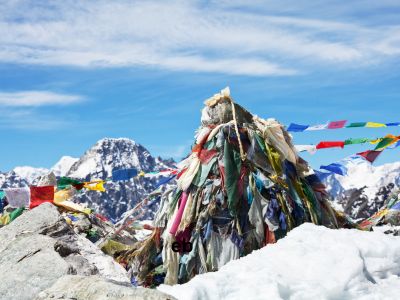
The trail continues along a moraine of the Khumbu Glacier. We climb the Thukla Pass (4,830m), where a memorial site honors climbers lost on Everest. From here, the path flattens out as we reach Lobuche, a small settlement surrounded by snow-capped giants.

Day 10
Accomodation
Tea house
Meal
BLD

Time
7-8 hrs
Max Altitude
5364m

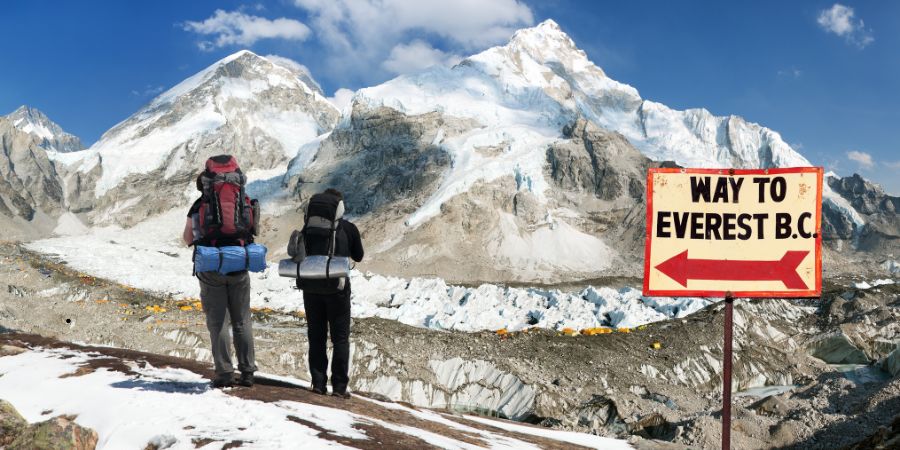
Today is tough but incredibly rewarding. We trek to Gorakshep, drop our bags, and continue to the legendary Everest Base Camp. The trail is rugged and follows the Khumbu Glacier. Standing at the foot of the world’s tallest mountain is an emotional experience for many. We return to Gorakshep to rest.

Day 11
Accomodation
Tea house
Meal
BLD

Time
6-7 hrs
Max Altitude
5545m

We wake early to hike up Kalapatthar for sunrise over Everest. It’s the best viewpoint in the region with 360° views of Everest, Nuptse, and Pumori. After soaking it in, we descend back to Gorakshep, have breakfast, and continue to Lobuche.

Day 12
Accomodation
Camping Tent
Meal
BLD

Time
4-5 hrs
Max Altitude
5400m

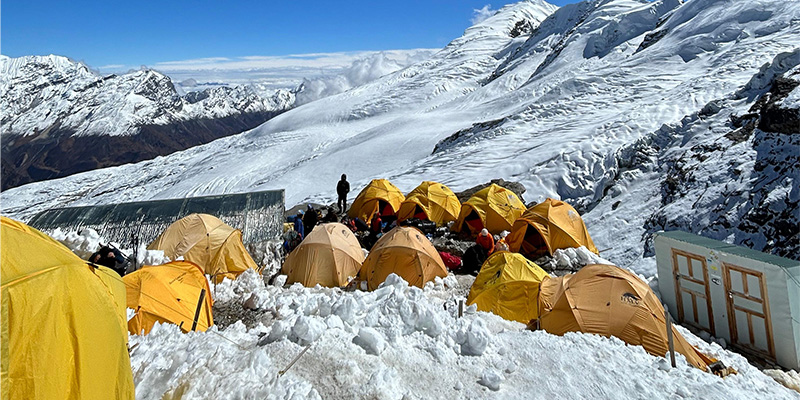
Leaving the main trail, we move toward Lobuche Base Camp. After a short break, we ascend steep slopes of rock and ice to High Camp. The trail can be snowy and icy depending on conditions. At High Camp, we set up tents and review rope techniques, jumar use, and climbing strategies with our guides. Hydration and rest are key tonight.

Day 13
Accomodation
Camping Tent
Meal
BLD

Time
8-10 hrs
Max Altitude
6119m

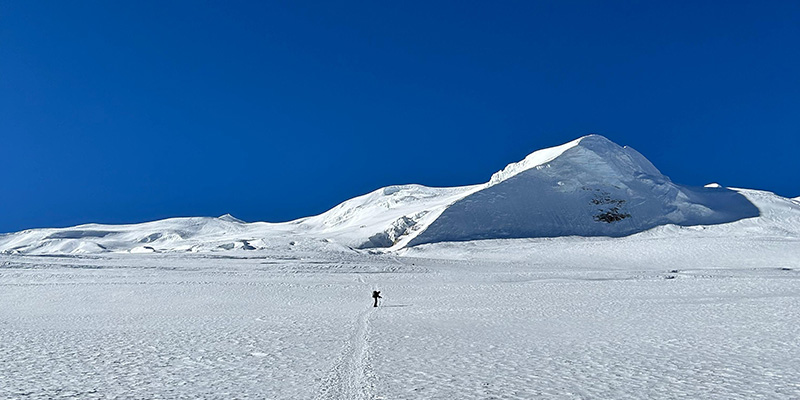
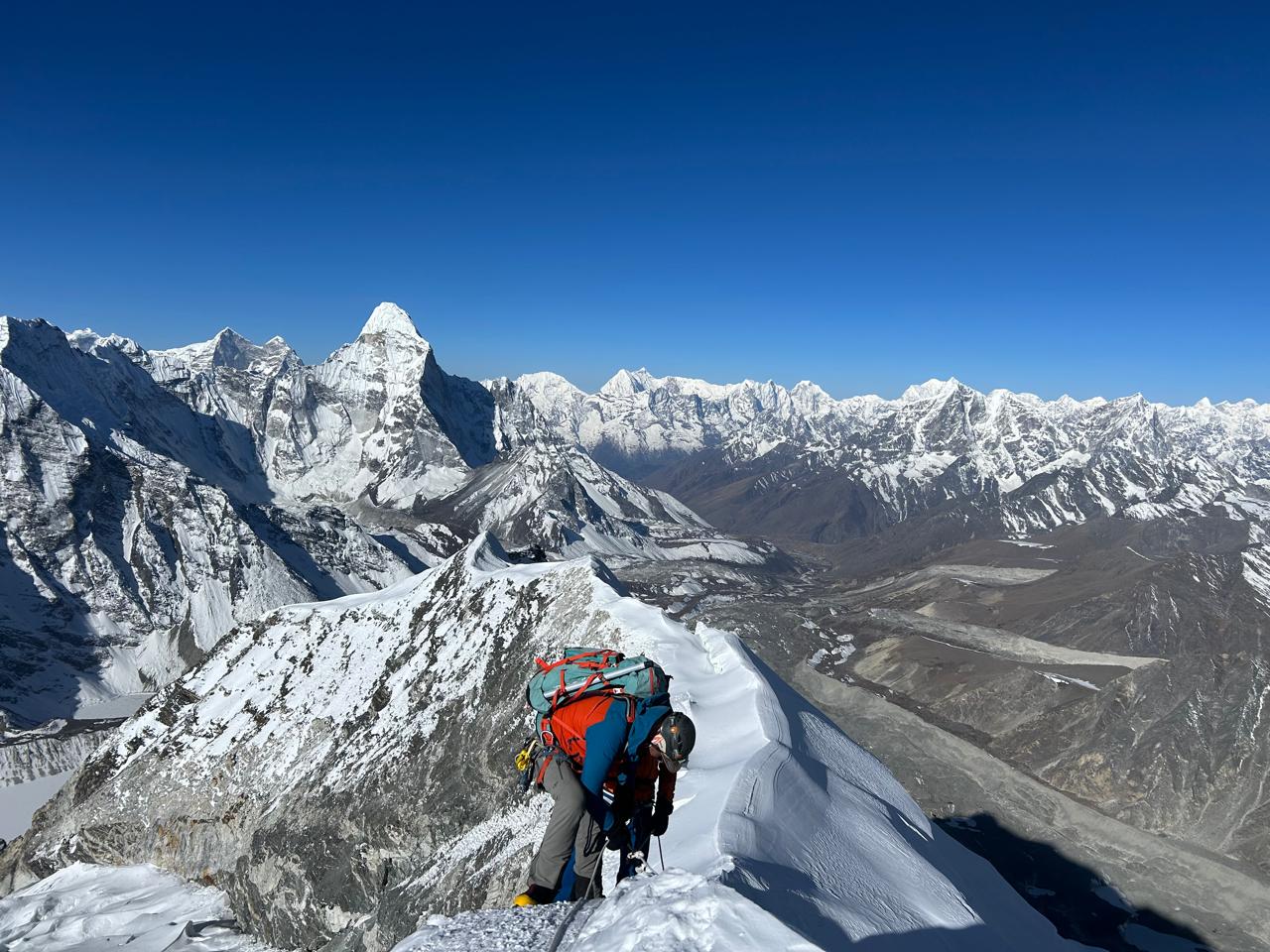
Summit day! We start early (around 2–3 AM) using headlamps. The initial climb is over rocky terrain before reaching the glacier. You’ll use fixed ropes and crampons for the final section. The summit ridge is steep but safe with guide support. From the top, the views are mind-blowing — Everest, Lhotse, Makalu, and the entire Khumbu range. We descend carefully and return to Base Camp.

Day 14
Accomodation
Null
Meal
BLD

Time
Null
Max Altitude
Null

This day is kept as a backup in case of poor weather or other delays. If not used, we descend early and enjoy extra rest in lower villages.

Day 15
Accomodation
Tea house
Meal
BLD

Time
5 - 6 hrs
Max Altitude
3985m

After the physically intense summit day, we enjoy a well-earned descent. The trail feels easier as we pass through alpine pastures and return to warmer elevations. In Pangboche, you can visit the oldest monastery in the Khumbu.

Day 16
Accomodation
Tea house
Meal
BLD

Time
6-7 hrs
Max Altitude
3440m

We retrace our steps down the Imja Valley, cross rivers, and walk through rhododendron forests back to Namche. It’s a long walk but energizing thanks to increased oxygen and the joy of a successful summit.

Day 17
Accomodation
Tea house
Meal
BLD

Time
6-7 hrs
Max Altitude
2840m

Final day on the trail! We descend through Phakding and other familiar villages. Once in Lukla, it’s time to celebrate your achievement with the team — maybe with a local beer or cake!

Day 18
Accomodation
3 star Hotel
Meal
Breakfast

Time
30 min
Max Altitude
1350m

Early morning flight back to Kathmandu. After check-in at your hotel, enjoy a warm shower, clean clothes, and the comforts of the city. Free day to shop, rest, or celebrate.

Day 19
Accomodation
.
Meal
Breakfast

Time
.
Max Altitude
.

Today we will provide you private car to take you to the airport for your flight or you can extend the trip.

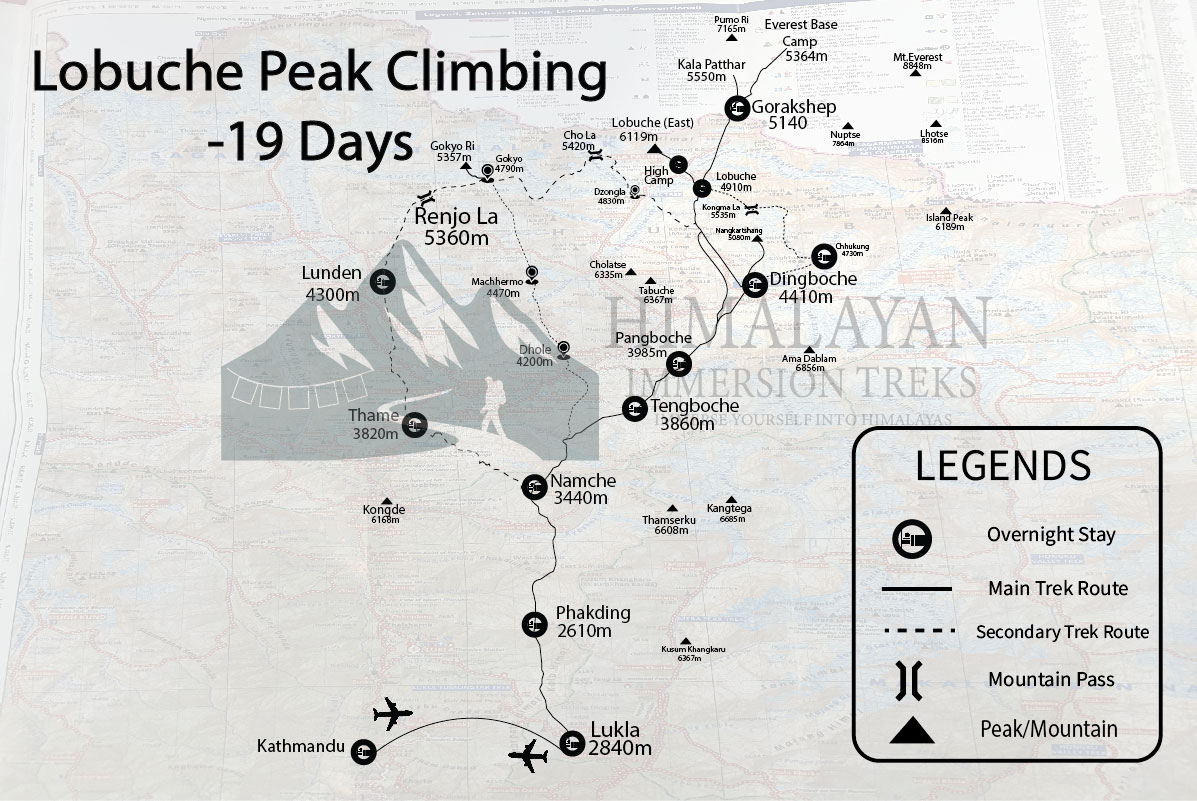
Route Map route map images
Altitude Chart altitude chart images
Fixed Departure
# Date Cost Size Status Action
FAQ'S
Q1.

What is Lobuche Peak?

Lobuche Peak is a prominent mountain in the Khumbu region of Nepal, offering two main summits: Lobuche East (6,119 meters) and Lobuche West (6,145 meters).

Lobuche East is more popular among climbers due to its relatively easier route and accessibility compared to Lobuche West, which is more technically challenging.

Not mandatory, but it helps. Our guides provide pre-climb training at High Camp. We’ll teach you how to use fixed ropes, ascenders (jumar), and crampons. This climb is suitable for first-time climbers with strong trekking backgrounds.

The best time to climb Lobuche Peak is during the pre-monsoon (March to May) and post-monsoon (September to November) seasons. These periods offer stable weather and clear views.

The entire expedition typically takes around 18-21 days, including trekking to Everest Base Camp for acclimatization and the climb itself.

Lobuche East is considered a moderately challenging climb, suitable for climbers with some technical experience. The ascent involves steep sections of ice and rock.

Climbers need several permits, including the Everest National Park Permit, TIMS (Trekkers' Information Management System) card, and a climbing permit specifically for Lobuche Peak.

While basic trekking gear is essential, most climbing gear such as crampons, harnesses, ice axes, and helmets can be rented in Kathmandu or arranged by your trekking company.

Yes, proper acclimatization is crucial to prevent altitude sickness. The itinerary typically includes acclimatization days and a trek to higher altitudes, such as Everest Base Camp.

Accommodation ranges from teahouses and lodges during the trek to camping in tents at higher altitudes near the base of the peak.

Climbers should be in good physical condition, capable of enduring long days of trekking and climbing. Cardiovascular fitness, strength, and stamina are essential.

xperienced guides lead the expedition, ensuring safety and providing technical support. Porters assist by carrying heavy loads, allowing climbers to focus on the ascent.

Yes, comprehensive travel insurance that covers high-altitude climbing, emergency evacuation, and medical expenses is essential.

Trekkers can expect a variety of meals, including local Nepali dishes and international cuisine. At higher altitudes, the menu may be more limited, but nutritious and energy-rich food is provided.

Essential items include layered clothing for varying temperatures, climbing gear, trekking boots, a sleeping bag, first aid kit, and personal items like sunscreen, sunglasses, and a camera.

Yes, many climbers combine the Lobuche Peak climb with the Everest Base Camp trek, providing additional acclimatization and an enhanced trekking experience.

Review

Customer Feedback

How was your experience with us?

★ ★ ★ ★ ★

Our Company

With years of Himalayan experience, Himalayan Immersion Treks is a leading Nepali company known for real adventures, expert guides, and local respect.